Meditation Exercises For Anxiety Relief: 10 Simple Ways to Calm Your Mind
Anxiety has a sneaky way of showing up right when you least expect it. Your heart races, your chest feels tight, and your brain starts spinning a million miles an hour over things that might not even happen. If this sounds familiar, take a deep breath. You are not alone, and you do not have to live trapped inside that endless loop of worry. One of the most powerful tools to calm a busy mind is practicing meditation exercises for anxiety relief. You do not need to sit on a mountain top or chant in a cave to feel better. In fact, you can soothe your nervous system right from your living room couch. Let us explore how simple breathing and mindfulness habits can change your life today.
What Are the Best Meditation Exercises For Anxiety Relief?
When worry takes over, finding the right practice makes all the difference. Not all techniques work for everyone, so exploring a few different styles helps you discover what fits your unique needs.
Simple Mindfulness Meditation for Anxious Thoughts
Mindfulness is simply the art of paying attention to the present moment without judging it. When anxious thoughts pop up, like little pop-up ads on a computer screen, mindfulness teaches you to watch them float by instead of clicking on them. You start by noticing the thought and saying to yourself, "Ah, there is that worry again." Next, you let it go by imagining the thought as a cloud drifting across the sky. Finally, you return to the breath and gently bring your attention back to the simple feeling of air moving in and out of your nose.
Guided Relaxation Techniques for Stress
If sitting in total silence makes your brain race even faster, best guided meditation for anxiety and depression apps and recordings are your best friend. A soothing voice walks you through every single step, making it super easy to follow along without getting distracted.
Expert Insight: "Guided audio takes the guesswork out of mindfulness. When your brain is overwhelmed, letting someone else guide your focus lowers the mental effort required to relax." — Dr. Sarah Jenkins, Clinical Psychologist.
Read Also: Meditation For Improving Mental Focus: Boost Clarity And Productivity
Why Is Daily Meditation Important for Anxiety Management?
Building a new habit takes a little bit of time, but the payoff for your brain is massive. Consistency is the secret sauce that trains your nervous system to stay cool under pressure.
Daily Meditation Habits for Mental Wellness
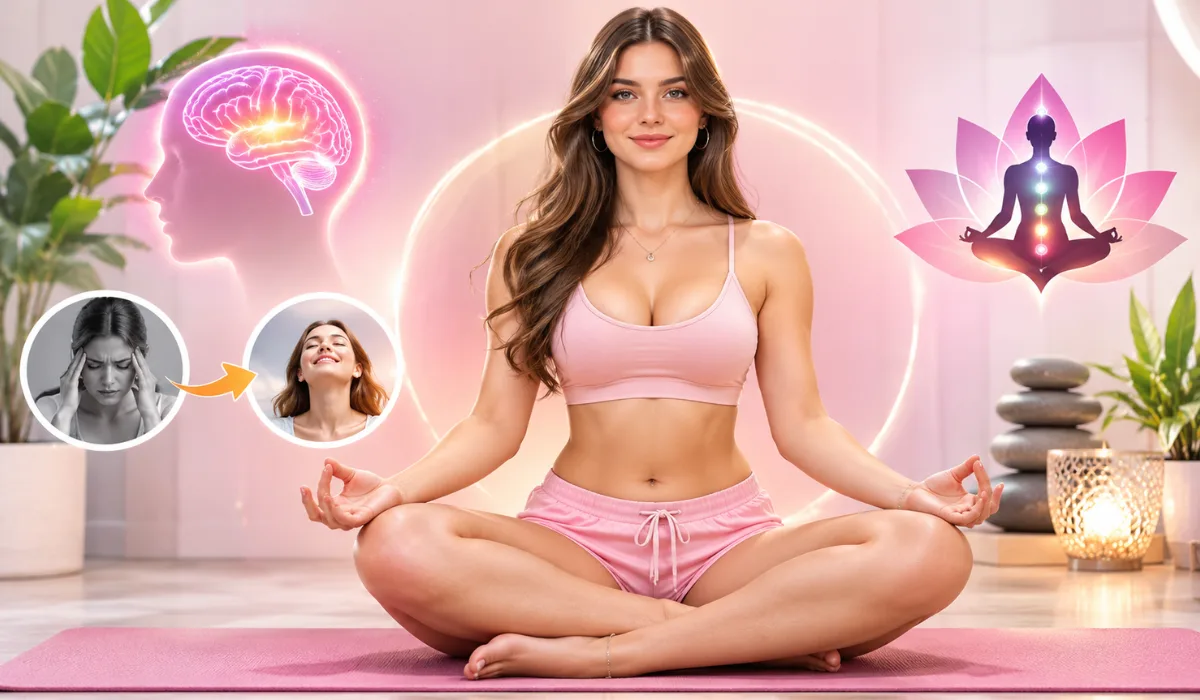
Doing a quick session every single day changes the physical structure of your brain. It shrinks the amygdala—the brain's alarm system—and strengthens the prefrontal cortex, which handles logic and calm decision-making. You can anchor your habit by tying your practice to an existing daily routine, like right after brushing your teeth. Always start tiny by committing to just two minutes a day so it never feels like a chore, and track your wins by noticing how much quicker you bounce back when everyday stressors pop up.
Top 10 Meditation Exercises For Anxiety Relief
To give you a complete toolkit, here are ten proven methods you can try starting today. Each one targets stress from a slightly different angle.
- Box Breathing: Inhale for 4 seconds, hold for 4, exhale for 4, and hold for 4.
- Body Scan Practice: Mentally check in with every body part from your toes to the top of your head to release hidden tension.
- Loving-Kindness Practice: Send warm, peaceful wishes to yourself and people you love.
- Walking Mindfulness: Turn a simple stroll around the neighborhood into a grounding sensory experience.
- Mantra Repetition: Silently repeat a comforting phrase like "I am safe right now."
- Grounding Technique (5-4-3-2-1): Notice five things you see, four you can touch, three you hear, two you smell, and one you taste.
- Visualization Practice: Picture your favorite peaceful place, like a warm sandy beach or a quiet forest.
- Chanting or Humming: Use the physical vibration of your own voice to soothe your vagus nerve.
- Gratitude Reflection: Shift your brain's focus by listing three tiny things going right in this exact moment.
- Open Monitoring: Sit quietly and simply observe every sound, feeling, and thought without trying to change them.
How Long Should You Meditate for Anxiety Relief?
Beginners often wonder if they need to spend hours sitting cross-legged to see results. The short answer is a resounding no.
Read Also: Meditation For Stress Free Lifestyle: 10 Easy Daily Techniques
10 Minute Meditation for Anxiety Relief
Research shows that just ten minutes a day is enough to notice a real drop in daily stress levels. During minutes 1 to 3, you settle in and focus purely on slowing down your breathing. In minutes 4 to 7, you let go of control and simply observe your thoughts as they drift by. Finally, in minutes 8 to 10, you gently wiggle your fingers and toes before opening your eyes to step back into your day.
Meditation Benefits for Stress Management
When you commit to regular meditation benefits for stress management start stacking up quickly in your daily life. You will notice lower blood pressure because calm breathing sends a signal to your heart to slow down. You will also experience better sleep quality since quieting nighttime overthinking helps you fall asleep faster and stay asleep longer. Additionally, you will enjoy sharper focus because training your brain to return to the breath improves your concentration at school or work.
Guided Meditation for Anxiety and Overthinking
Overthinking is exhausting. It feels like watching a horror movie starring yourself, directed by your own imagination.
When your mind starts catastrophizing, specialized guided meditation for anxiety and overthinking acts as a mental reset button. It interrupts the spiral by giving your brain a single, anchor point—like the sensation of your feet touching the floor.
Yoga Meditation for Anxiety and Mental Peace
Sometimes your body holds onto so much nervous energy that sitting still feels impossible. That is where movement comes in handy.
Yoga and Meditation for Stress Relief
Combining gentle stretches with mindful breathing releases physical knots in your muscles while calming mental chatter. You can try Child's Pose, which is a classic resting posture that signals safety to your nervous system. Cat-Cow Stretch offers gentle spinal movement that releases built-up tension in your back and neck. Corpse Pose (Savasana) involves lying flat on your back at the end of a session to integrate total relaxation.
Meditation Techniques for Better Emotional Health
Your emotions are visitors passing through a house. Learning meditation techniques for better emotional health stops you from slamming the door on difficult feelings or letting them take over completely.
Expert Insight: "Emotional regulation is like a muscle. Every time you notice a feeling of panic and choose to breathe through it instead of reacting, you make that muscle stronger." — Marcus Vance, Mindfulness Researcher.
Read Also: Meditation Techniques For Daily Practice to Reset Your Busy Brain
Mindfulness Routine for Daily Stress Management
You do not need a special cushion or an expensive app to build a mindfulness routine for daily stress management. You just need a little bit of intention. You can start with a Morning Check-In by taking three slow breaths before looking at your phone when you wake up. Follow this with a Midday Reset by pausing for sixty seconds during lunch to drop your shoulders away from your ears. Wrap up with an Evening Wind-Down to reflect on one good thing that happened today right before turning off the lights.
Frequently Asked Questions
Can meditation completely cure my anxiety?
While it is not a magical medical cure, it is a powerful daily tool that significantly reduces symptoms and helps you respond to stress with grace and confidence.
What if I fall asleep while practicing?
That just means your body was sleep-deprived! Try practicing sitting up straight in a chair instead of lying down in bed if you want to stay awake.
How soon will I see results?
Many people feel a noticeable drop in their heart rate after just a single five-minute breathing session. Long-term brain changes usually show up after a few weeks of daily practice.

Meditation for Athletic Performance: A Complete Athletes Guide

Gut Health Nutrition: Foods and Habits for Better Digestion

Fitness Band Exercise for Arms

Fitness Body Women Exercises

The Importance of Mental Health Awareness: Why It Matters Today
One Leg Standing Yoga Poses for Balance, Strength, and Focus